Q.
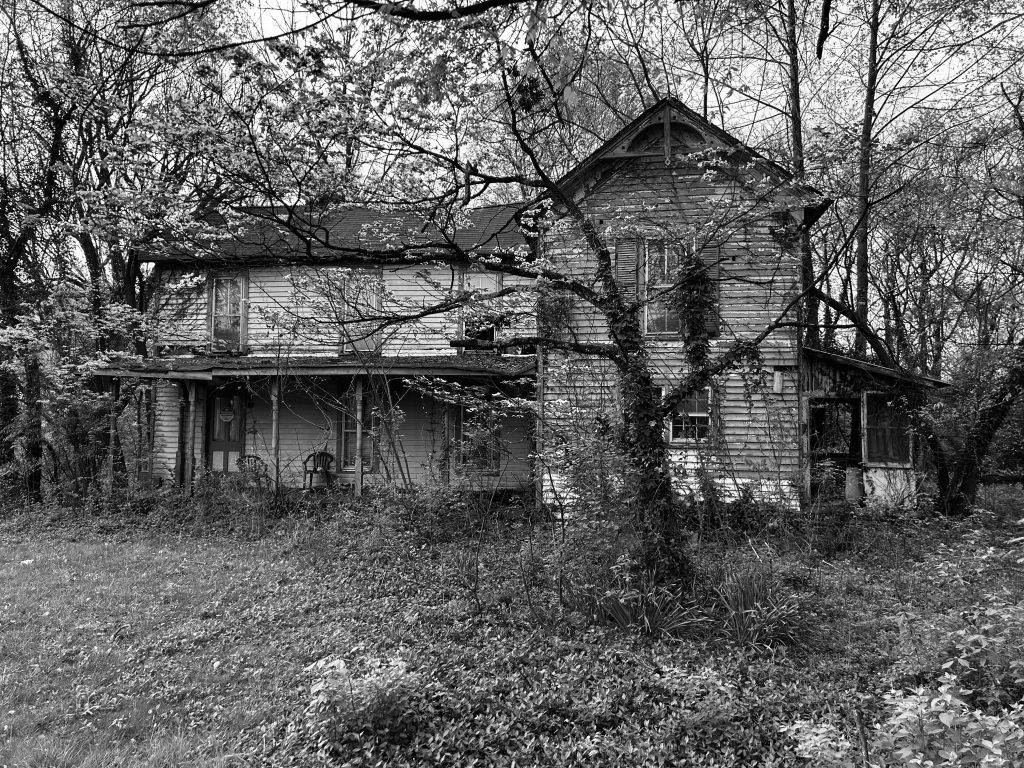
My client has purchased a residential property which has been derelict for over 10 years. He wants to renovate the property and resell it once the work is completed. What are the VAT implications?
A.
There are potentially significant VAT advantages available when renovating a residential property that has been unoccupied for more than 10 years.
In particular, the client may benefit from:
- 5% VAT on qualifying renovation works, rather than the standard rate of 20%.
- Zero-rating the subsequent sale of the renovated property, provided the relevant conditions are satisfied.
- Recovering VAT on renovation and associated development costs, subject to the normal input tax recovery rules.
However, the VAT treatment is not automatic. The distinction between a property that has been empty for two years and one that has been empty for 10 years is particularly important.
The legislation provides two separate reliefs, and understanding how they interact can make a substantial difference to the profitability of a property development project.
Q1. Can the renovation works qualify for the reduced rate of 5% VAT?
Yes. Under Schedule 7A, Group 7 of the VAT Act 1994, qualifying renovation or alteration works to residential premises that have not been lived in for at least two years may benefit from the reduced rate of 5% VAT.
This relief is explained in Section 8 of HMRC’s VAT Notice 708, Buildings and Construction.
As the client’s property has reportedly been derelict for over 10 years, the two-year condition should be satisfied, provided the property has genuinely not been occupied as residential accommodation during the relevant period.
The reduced rate can apply to a wide range of qualifying works, including:
- Structural repairs and alterations.
- Rewiring and electrical installations.
- Plumbing and central heating installations.
- Replacement kitchens and bathrooms.
- Plastering, roofing and damp-proofing.
- Replacement windows and doors.
- Extensions and other qualifying improvements.
Where contractors supply and install qualifying building materials as part of their services, those materials can generally benefit from the same 5% VAT rate.
However, not all expenditure qualifies.
For example, the separate purchase of materials from builders’ merchants will generally attract VAT at 20%. Certain items, such as carpets and some fitted furniture, are also excluded from the reduced rate.
The client should establish the VAT treatment with the contractors before work begins. Incorrectly charged VAT can create unnecessary costs and administrative difficulties.
Q2. What evidence is required to demonstrate that the property has been empty?
The client must be able to demonstrate that the property has not been lived in for the relevant period.
HMRC may request evidence supporting the application of the reduced rate or the zero-rating of the eventual sale.
Useful evidence includes:
- Council Tax records.
- Electoral Register information.
- Utility company records showing no residential usage.
- Confirmation from the local authority’s Empty Property Officer.
- Historical photographs and surveyors’ reports.
- Other reliable documentation establishing when the property was last occupied.
HMRC’s guidance confirms that a letter from an Empty Property Officer certifying that the property has not been lived in for 10 years can provide sufficient evidence of the relevant period.
A property being described as derelict does not establish that the statutory conditions are satisfied.
For example, a property could be in extremely poor condition but still have been occupied occasionally during the previous 10 years.
The actual history of occupation is therefore crucial and can sometimes be difficult to obtain.
Q3. Will VAT be payable on the subsequent sale of the renovated property?
This is potentially the most important aspect of the transaction.
Ordinarily, the sale of an existing residential property is exempt from VAT under Schedule 9, Group 1 of the VAT Act 1994.
However, special rules apply to residential properties that have not been used as dwellings for at least 10 years.
Under Schedule 8, Group 5 of the VAT Act 1994, certain conversions of non-residential buildings into dwellings qualify for zero-rating on the first grant of a major interest.
Importantly, for this purpose, a building that was previously residential but has not been used as a dwelling for at least 10 years can qualify under the non-residential conversion provisions.
Therefore, the first sale of a qualifying residential property following its renovation may be zero-rated rather than exempt from VAT.
This treatment is particularly valuable because zero-rating is a taxable supply, whereas exemption is not.
The client must satisfy all the relevant conditions, including:
- The building must qualify under the non-residential conversion provisions, including the relevant 10-year non-occupation requirement.
- Following the works, it must meet the statutory requirements for a qualifying dwelling.
- The client must have the required status as the person converting the property.
- The disposal must constitute the client’s first qualifying grant of a major interest, such as the sale of the freehold.
- Any other applicable statutory conditions must be satisfied.
The period of non-residential use or non-occupation must be carefully established. HMRC’s guidance considers the 10 years immediately preceding the sale, while also requiring appropriate evidence of the building’s earlier occupation history.
Q4. What is the difference between an exempt sale and a zero-rated sale?
The distinction is fundamental to VAT recovery. Although neither treatment normally results in VAT being added to the purchaser’s price, the consequences for the developer are very different.
Exempt sale
Where the onward sale is exempt from VAT, the developer will generally be unable to recover VAT incurred on costs directly attributable to that exempt sale, subject to any applicable partial exemption rules.
Zero-rated sale
Where the onward sale qualifies for zero-rating, it is treated as a taxable supply at 0%.
This means the developer may be entitled to recover VAT incurred on costs attributable to that sale, provided the normal input tax conditions are satisfied.
For a substantial renovation project, the distinction can represent a considerable financial saving.
Q5. Can the client recover VAT incurred on the renovation works?
Potentially, yes.
If the intended onward sale qualifies for zero-rating and the client is VAT registered, VAT incurred on qualifying business expenditure will generally be recoverable, subject to the normal rules.
This can include VAT on:
- Building and renovation works.
- Qualifying materials and supplies.
- Architects’ and surveyors’ services.
- Professional and consultancy fees.
- Other costs directly attributable to the taxable development.
The amount recoverable will depend on the nature of the expenditure, whether valid VAT invoices are held and whether any specific input tax restrictions apply.
For example, certain goods incorporated into residential buildings are subject to special recovery restrictions.
The client’s intention at the time expenditure is incurred is also important.
If the client originally intends to make a zero-rated sale but subsequently decides to retain the property for exempt residential letting, this change of intention may affect VAT recovery and require adjustments to input tax previously claimed.
VAT recovery should be considered at the outset, rather than after the renovation has been completed.
Q6. Does the client need to register for VAT?
If the proposed sale qualifies for zero-rating and is made in the course of an economic activity, it forms part of the client’s taxable turnover for VAT registration purposes.
Therefore, the client will need to consider whether VAT registration is compulsory or whether voluntary registration is appropriate.
The fact that no VAT is charged to the purchaser does not mean the transaction can be ignored for registration purposes.
The client may also be entitled to register before the property is sold, based on an evidenced intention to make taxable supplies. This could allow input tax to be recovered during the development rather than waiting until completion.
However, whether the activity constitutes an economic activity and the appropriate timing of registration must be considered in light of the particular facts.
Where the client is undertaking a property development with a view to resale, VAT registration should be reviewed before significant expenditure is incurred.
Q7. Can you illustrate the potential VAT saving?
Consider the following example.
A property developer purchases a derelict residential property that has not been occupied for 12 years.
The developer intends to renovate and sell it.
The qualifying renovation works cost £150,000 excluding VAT.
Scenario 1: The works are incorrectly charged at 20% VAT
| Description | Amount |
| Renovation works | £150,000 |
| VAT at 20% | £30,000 |
| Total | £180,000 |
Scenario 2: The renovation works qualify for 5% VAT
| Description | Amount |
| Renovation works | £150,000 |
| VAT at 5% | £7,500 |
| Total | £157,500 |
The immediate reduction in VAT charged by the contractors is £22,500.
However, the ultimate saving depends on whether the developer can recover the VAT.
If the eventual sale is zero-rated and all the input tax qualifies for recovery, the developer may recover the £7,500 charged at 5%.
In that situation, the VAT becomes a recoverable amount rather than a permanent development cost.
The reduced rate nevertheless provides an important cash-flow advantage, as the developer does not initially have to finance VAT at 20%.
By contrast, if the onward sale is exempt and the VAT is irrecoverable, the reduced rate could produce a genuine saving of £22,500 compared with standard-rated renovation works.
This illustrates why the VAT liability of both the renovation works and the eventual sale must be considered together.
Q8. What happens if the property is renovated and subsequently rented rather than sold?
This would materially change the VAT position.
The ordinary letting of residential accommodation is generally exempt from VAT.
Consequently, where the developer decides to retain the property and generate residential rental income, VAT on costs attributable to that exempt activity will generally not be recoverable, subject to the relevant partial exemption provisions.
If VAT has already been recovered on the basis of an intended zero-rated sale, a subsequent change of intention may trigger an adjustment.
It is therefore important to establish the client’s intended use of the property and monitor any changes to the development strategy.
It is also possible to structure the development in a way that allows the client to let the property and recover the input tax. This is not aggressive tax planning and is accepted by HM Revenue and Customs.
Q9. What should accountants and property developers do before commencing the renovation?
The VAT position should ideally be established before the client enters into significant construction contracts.
In particular, the following should be completed:
- Verify the occupation history. Obtain reliable evidence confirming when the property was last occupied.
- Review the reduced-rate conditions. Establish which renovation works qualify for 5% VAT and ensure contractors apply the correct liability.
- Consider the proposed disposal. Determine whether the eventual sale can qualify for zero-rating under the non-residential conversion provisions.
- Review VAT registration. Consider whether the client is required or entitled to register for VAT before the development is completed.
- Assess input tax recovery. Identify which development costs may be recoverable and ensure supporting VAT invoices are retained.
- Monitor changes of intention. Reconsider the VAT position if the client decides to rent the property or changes the nature of the development.
Our View
Properties that have been empty for a considerable period can present valuable VAT planning opportunities, particularly where the intention is to renovate and resell.
However, the two-year and 10-year rules serve different purposes.
The two-year rule concerns the VAT rate applicable to qualifying renovation works.
The 10-year rule can determine whether the subsequent sale of the renovated property is zero-rated rather than exempt.
Confusing these two provisions, or assuming that an empty property automatically qualifies, can result in lost VAT recovery, incorrect VAT treatment and potentially costly disputes with HMRC.
The most important advice is to establish the VAT position before the renovation begins.
That allows the developer to obtain the necessary evidence, ensure contractors charge VAT correctly and determine whether input tax can be recovered.
How ETC Tax Can Help
At ETC Tax, we specialise in property VAT and regularly advise accountants, property developers and investors on the VAT implications of acquiring, renovating, converting and selling residential and commercial properties.
We can assist with determining whether the reduced rate of 5% applies to renovation works, whether the onward sale qualifies for zero-rating, and the extent to which VAT incurred on development costs can be recovered.
If your client is planning to renovate a derelict or long-term empty residential property, obtaining specialist VAT advice before the works commence could make a significant difference to the project’s overall profitability. Click here to get in touch with our tax experts. Head over to our VAT section on our website for further reading about our services.
law
Pendidikan
Pendidikan
Download Anime
Berita Teknologi
Seputar Teknologi

Leave a Reply